Reclaiming Wonder
Turning audience insight into new products, experiences and ways to participate. How might Save the Children create something genuinely valuable for a new generation of supporters, rather than simply asking for another donation? Across audience and cultural insight, opportunity framing, concepts, early commercial modelling and assumption-led testing, we explored propositions and deliberately deprioritised ideas where value exchange, commercial potential or the organisation’s right to play was not strong enough.
Context
Traditional charity engagement can become transactional: here is a problem, please donate. Research suggested that people cared deeply about large social issues but could feel overwhelmed by their scale. They wanted agency, joy, creativity, connection, nostalgia, purpose and tangible ways to express their values. The question became: what could Save the Children create that people would genuinely value, participate in and want in their lives?
My Role
As Innovation Lead, I worked across audience insight, opportunity framing, market research, concept creation, business-model thinking, commercial assumptions, synthetic-user feedback, stakeholder engagement and experiment design. My job was not to champion one idea, but to help turn a broad audience opportunity into propositions that could be challenged, compared, progressed or stopped.
Problem
The audience cared about big issues but could feel powerless or overwhelmed. The opportunity was to explore products and experiences that created value for the audience and value for children, rather than relying on another donation ask. Reclaiming Wonder explored how play, imagination, creativity and purposeful spending could offer a more meaningful way to participate.
Approach
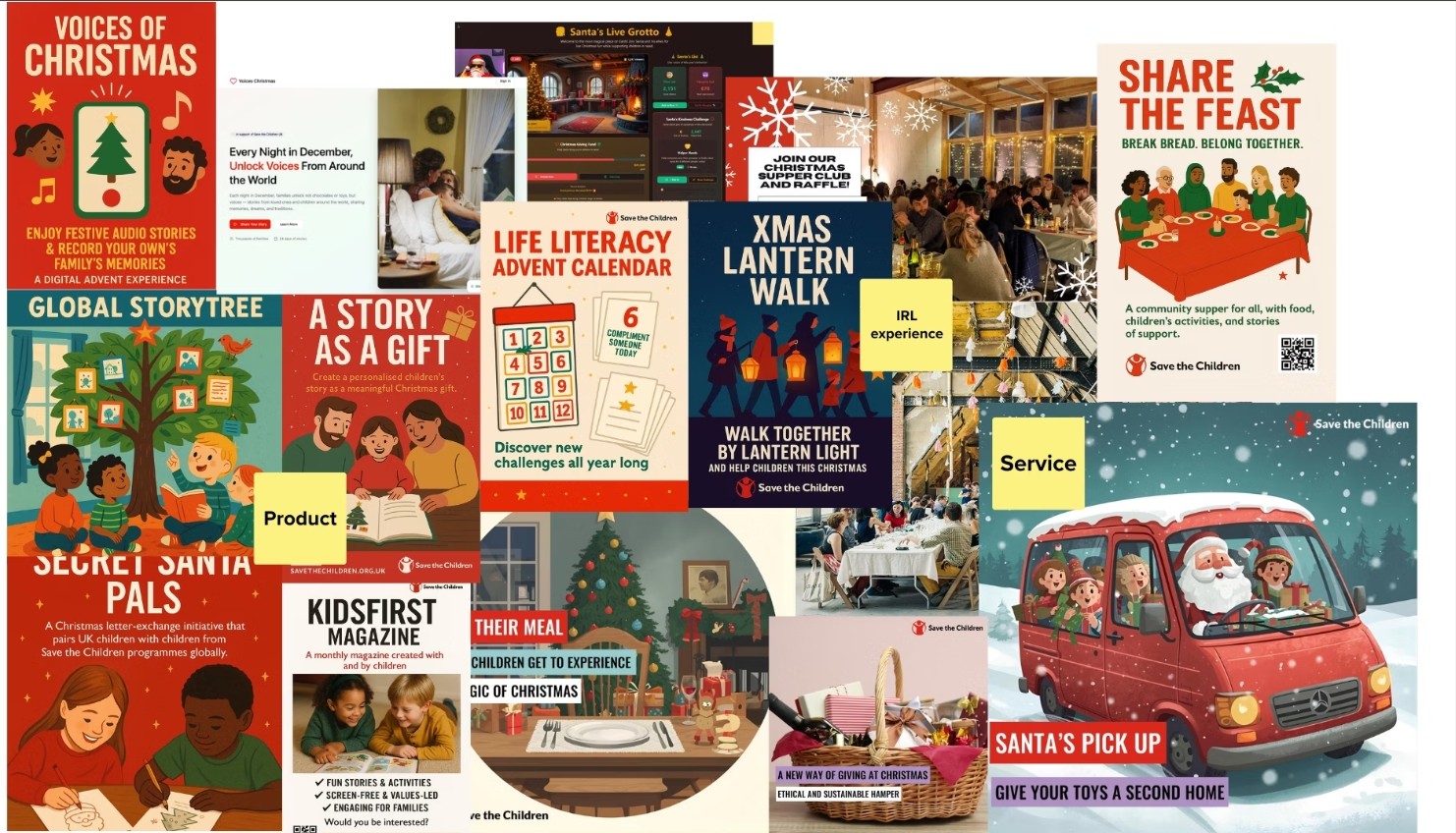
We explored opportunity spaces around excess versus real value, tradition versus new rituals, and escapism versus reflection. Playhaus was a proposed collection of child-designed ceramics, homeware and prints, with possible direct retail and partner routes. Early £20–£60 pricing and a ~£100k year-one profit model were assumptions to validate, not achieved results. LEGO: Build Better Futures explored limited-edition sets inspired by Save the Children projects; early modelling of 5,000 sets at £85–£100 and a suggested 15% donation indicated £65k–£75k potential charity income, not realised income. Both concepts depended on product desirability, authentic storytelling and partner appetite.
Experiments / Evidence
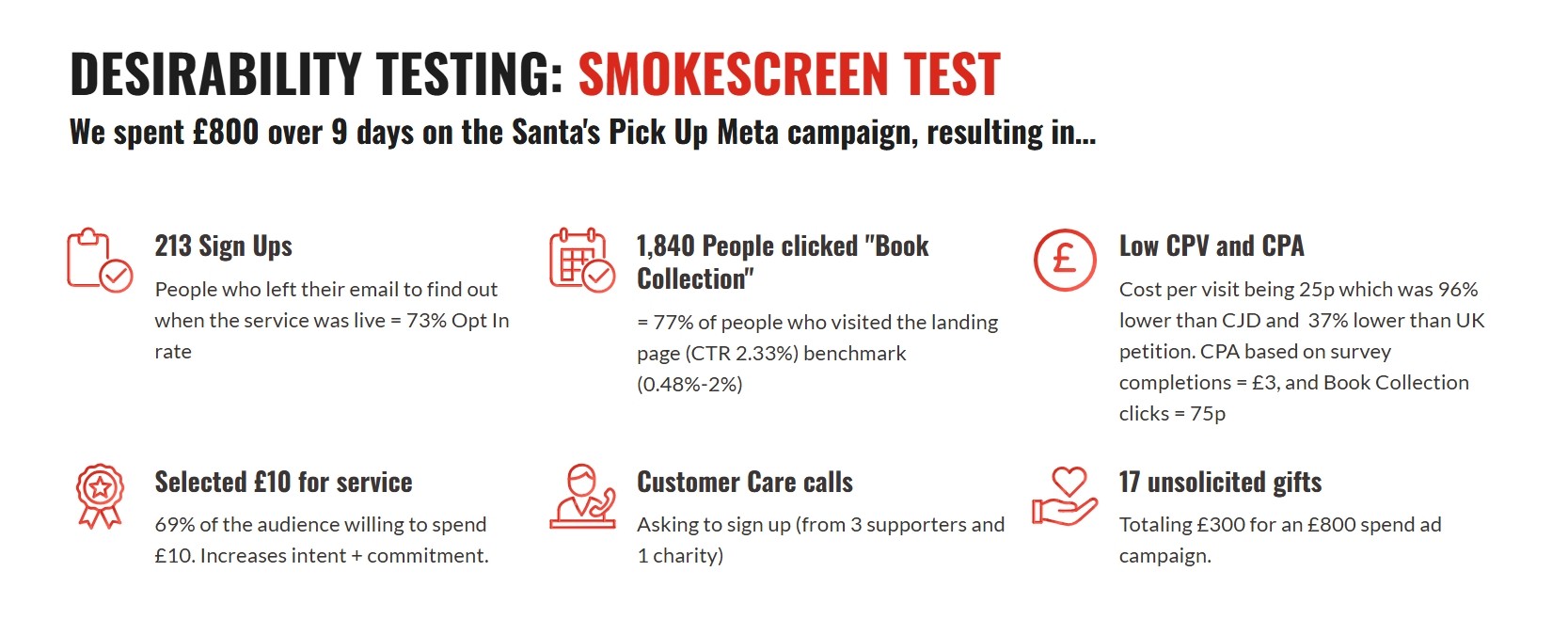
The work translated audience insight into concepts, explicit assumptions and proposed tests including market research, design mock-ups, Lyssna testing, commercial modelling, retailer conversations, partner validation and smoke tests. Feedback stressed that the story should feel authentic and respectful, not exploitative or overly sentimental; prints and textiles felt like a natural lower-commitment entry point.
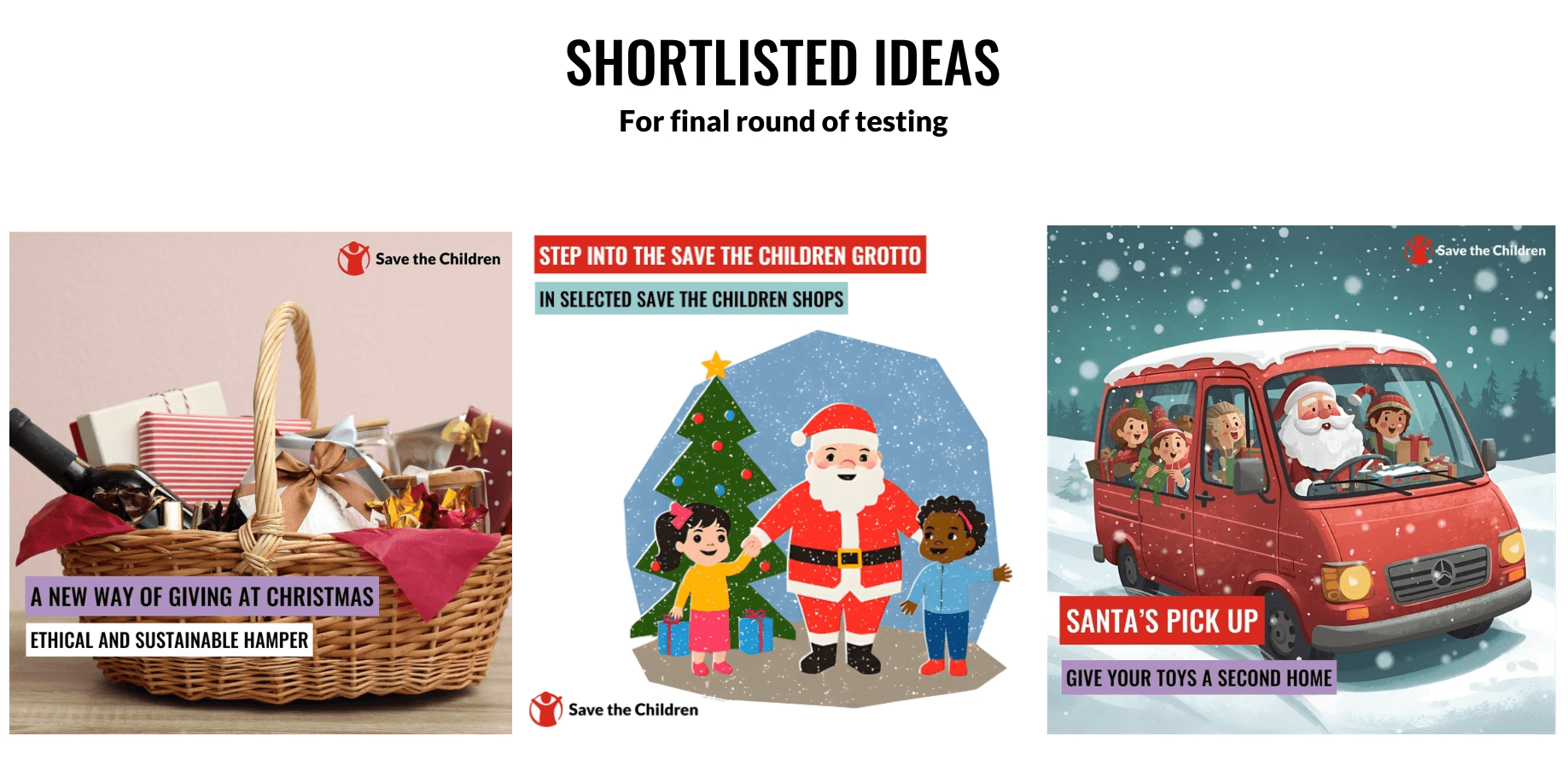
The learning: purpose can strengthen a proposition, but product desirability must lead. Several concepts were deliberately deprioritised: Play It Forward had a weak organisational right to play; Replay raised concerns about engagement, sourcing and mission fit; Adopt a Toy had a weak value exchange; Imagination Lab looked more promising as a brand activation than a standalone income proposition.
Outcome
The work created multiple propositions, surfaced the assumptions behind them, identified possible validation methods and modelled potential income mechanics. It also challenged Save the Children’s right to play and stopped weaker ideas. Reclaiming Wonder did not end with a single product launch; it clarified where further investment might be justified and where it was not.
What I Learned
Purpose is not the value proposition: people still need to genuinely want the product or experience. A commercially attractive market is not enough; the organisation needs a credible reason to participate. Sometimes the right answer is “not yet”. Starting with what people are trying to feel, express, experience or change is more useful than starting with what an organisation could sell.