TAILOR — Virtual Fitting - Tommy Hilfiger
Turning a virtual-fashion brief into a validated 3D fitting proposition. Could we create a digital wardrobe for virtual try-on and style? Customer discovery revealed a more urgent need: knowing whether clothes would fit. Through discovery and validation, we shifted the brief towards TAILOR, a 3D-avatar virtual fitting proposition designed to give online shoppers more confidence before buying.
Context
PVH / Tommy Hilfiger’s innovation team was exploring digital fashion, including a subscription-based digital wardrobe for virtual try-on, style experimentation and digital garments. Rather than build the proposed solution immediately, the oneUp venture team treated the brief as a hypothesis. The work explored customers aged approximately 13–34 across the UK, Netherlands, Germany, France, Italy and Spain.
My Role
As one of two oneUp consultants leading the project, I worked as Lead Innovation & Growth Consultant / Venture Builder alongside PVH stakeholders across innovation, ecommerce, technology and commercial functions. I led customer discovery, assumption mapping, hypothesis design, experiments, interviews, social and landing-page tests, persona and proposition development, prototype testing, technical discovery, partner research, commercial-model thinking and the executive recommendation. I did not develop the underlying 3D technology.
Problem
The initial digital-wardrobe idea was a hypothesis, not an answer. Discovery found that shoppers’ more immediate problem was fit: inconsistent sizing, uncertainty about body shape, disappointing deliveries, buying multiple sizes and repeated trial and error. Around 70% of the 18–28 audience experienced fit as a significant problem; 69% reported difficulty finding the right size and 56% identified returns as a major hassle. The sharper need became: give me confidence this will fit before I buy.
Approach
We moved through discovery, problem fit, ideation, solution fit, technical feasibility, business-model work and a pilot recommendation. Our loop was business model / value proposition → assumptions → hypotheses → experiments → evidence → update the concept. The proposition shifted from digital clothes, social features and a digital wardrobe towards TAILOR: scan the body, create a personal 3D avatar, virtually try on garments and receive fit recommendations. Testing favoured realistic avatars, measurements, fit, size recommendations and confidence over a stand-alone digital wardrobe or social environment. We assessed four technical enablers—body scanning and avatar creation, 3D garment assets, draping and fit, and ecommerce integration—and considered make / buy / partner routes. The recommendation was to use specialist technology partners rather than build the full stack internally.
Experiments / Evidence
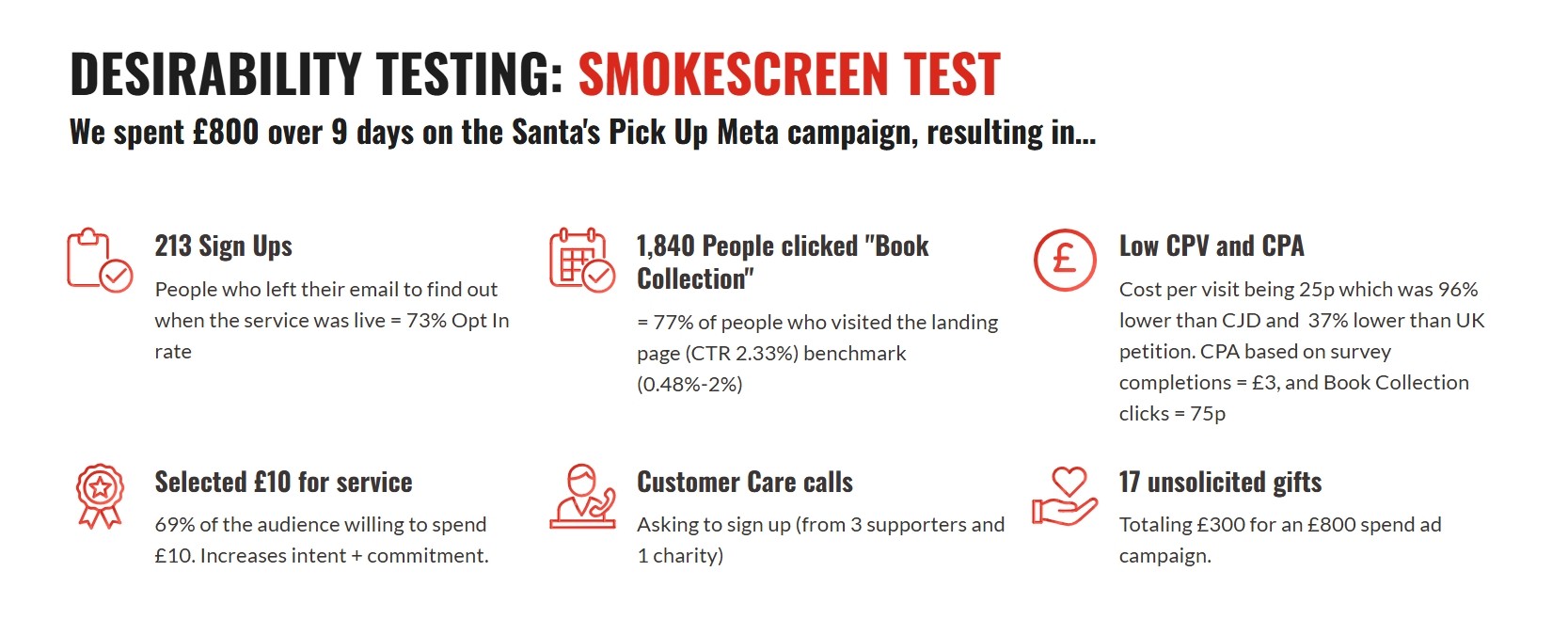
The programme ran through four major rounds and included 34 experiments, 29 consumer interviews, 25 assumptions tested, 23 technology experts interviewed, 10 channels tested, 4 creative directions, 467 completed surveys, 2,400 landing-page visits, 891 clicks, 47 user image uploads and 337,000+ advertising impressions. Early testing challenged the original assumptions: consumers did not appear ready to replace physical try-on entirely, and about 95% of Gen Z respondents in one early test were unfamiliar with digital-clothing ownership outside gaming. Research indicated that around 70% of 18–28-year-olds experienced fit as a significant problem.
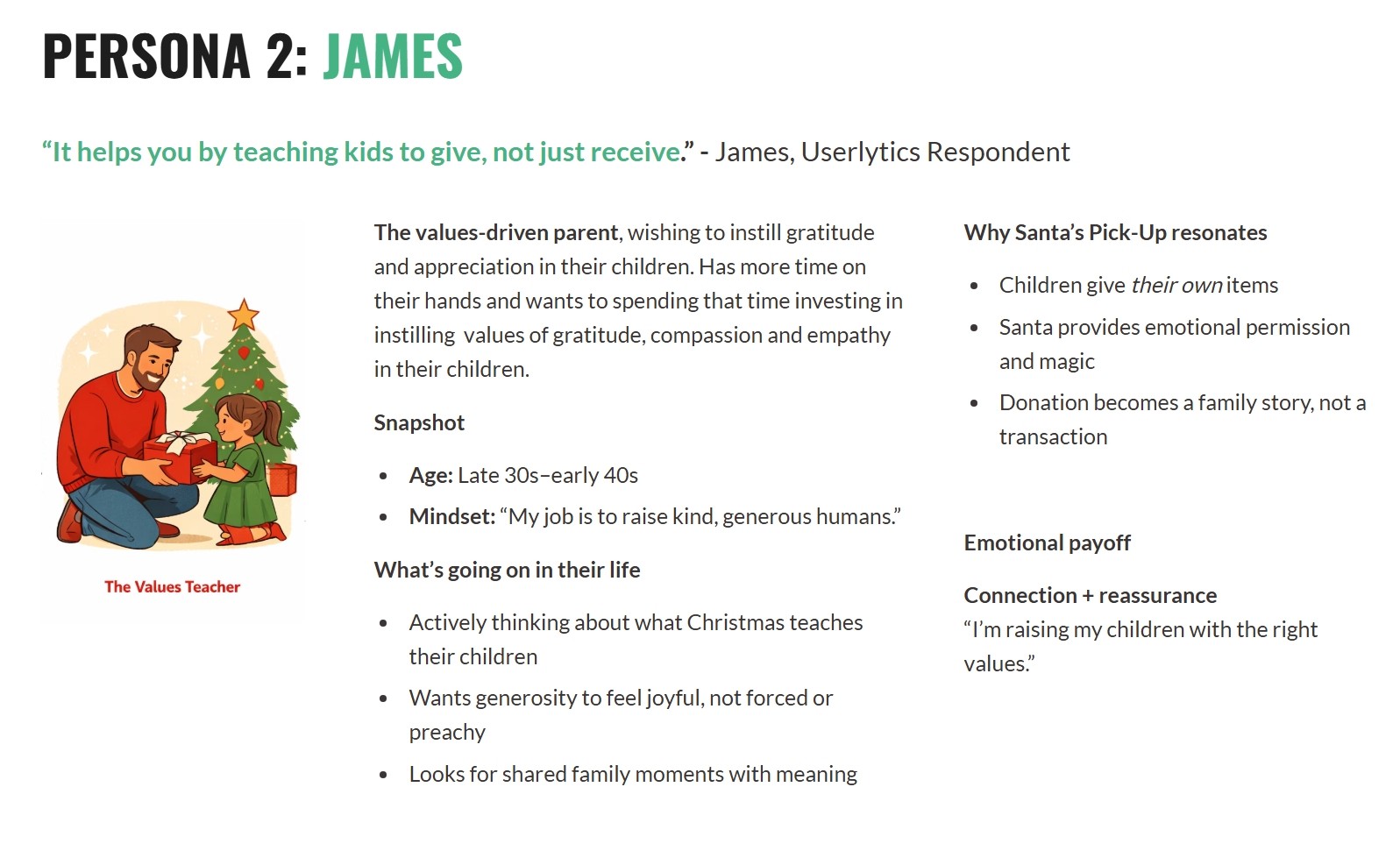
In concept testing, 80% of the Daniel audience and 70% of the Myrthe audience expressed interest in TAILOR; willingness to try technology like it scored about 3.8 / 5. Prototype work found 60% preferred a realistic avatar. These aggregate results come from distinct tests, not a single funnel.
Outcome
The project shifted from “Should we build a digital wardrobe?” to a focused customer problem, virtual-fit proposition, prototype, target audience and technical feasibility plan. The recommendation was to select technology partners, set technical benchmarks, establish legal and data foundations, and pilot with PVH brands while measuring conversion and returns. That was a recommended next stage, not a completed pilot or launch. Any broader B2B service model remained a potential route to explore, not a proven business model.
What I Learned
The brief is a hypothesis: discovery earned us the right to change direction from digital wardrobe to fit. Invalidating assumptions early was progress, not failure. Technology should serve the customer problem rather than be adopted because 3D or AR is fashionable. Desirability, technical feasibility and commercial viability need separate evidence; proof in one area does not establish the others.